

Credibility, expertise and consistency when you need it most
Blythe Rose Birmingham, 71 Queen’s Park Rd, Harborne, Birmingham B32 2LB

Credibility, expertise and consistency
when you need it most
Blythe Rose Birmingham, 71 Queen’s Park Rd, Harborne, Birmingham B32 2LB
Tips for managing the transition from care at home to specialist dementia care
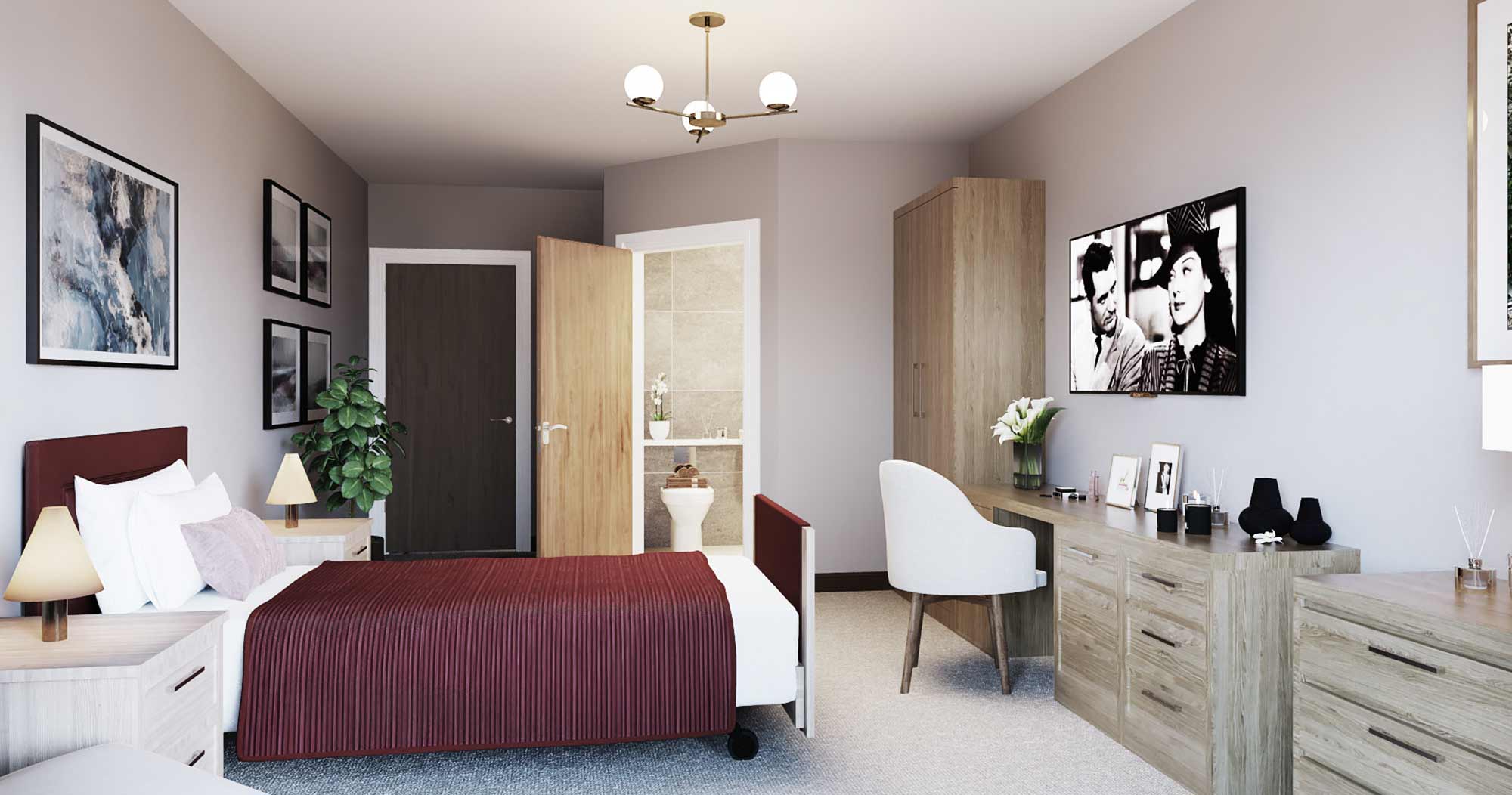
(An example of a typical MACC Care home bedroom)
The realisation that you can no longer keep your loved one safe and meet their care needs at home often poses great emotional turmoil for families. As dementia advances, behaviours can become more complex, unpredictable and exhausting. Recognising the need for a safe environment and the care of a specialist team may feel like you are letting your loved one down, or have failed them somehow.
Members of the family mutual support group at Blythe Rose Specialist Dementia Home in Solihull – individuals who too have found themselves in this stressful position – offer the following recommendations:
- Look at care homes before a crisis forces a decision. Many families find themselves choosing in a hurry after a hospital admission, when their loved one cannot safely return home. Visiting earlier gives you time to notice the things that matter.
- Consider all aspects of the home: Is the building calm, comfortable and designed around the needs of people living with dementia? Are staff warm, patient and consistent? Ask about staff turnover, dementia-specific staff training and how the home provides continuity.
- If your loved one is living with moderate to advanced dementia, be sure that expert nursing care is available to support future health care needs. Another move can be incredibly disruptive and few settings can cater for the combination of advancing dementia and complex clinical support needs.
- Be as prepared as you can – the move itself can bring unexpected emotions. Feelings of guilt, anger, loneliness, grief or frustration at your loss of control are widely shared and they do not mean you have made the wrong decision.
- Lean on the staff’s knowhow to help you understand what support may be available such as NHS Continuing Healthcare funding, known as CHC. Some people with complex health needs may qualify, although assessment can be challenging and is not based on diagnosis alone.
- Plan visits to your loved one carefully. To minimise distress when it’s time to leave, try timing your departure around a meal, activity or handover gently to a familiar member of staff. Taking someone out can be joyful, but it can also be unsettling so work with your care team to build a strategy to support this.
- Remember, choosing care does not end your role and can be a great act of love and kindness. You still remain your loved one’s nearest and dearest, and their advocate.

(An example of a typical MACC Care home interior)

(An example of a typical MACC Care home interior)

(An example of a typical MACC Care home interior)
FOLLOW US FOR REGULAR UPDATES


FOLLOW US FOR REGULAR UPDATES
